Bold, saucy, and loaded with peppers and onions — this Italian sausage pasta is the dinner that makes Tuesday feel like Sunday.


This post may contain affiliate links. As an Amazon Associate, I earn from qualifying purchases. Please see my disclosure policy for details.
For more easy sausage pasta recipes, check out my Sweet Potato & Sausage Frittata, Cheesy Baked Italian Sausage Pasta, and Sausage Risotto.
Table of Contents
This Italian sausage pasta is the dinner I make when I want something that tastes like it took longer than it did. The kind of recipe that smells so good it evokes "Dang, what are you cooking?" from the husband when he walks in the kitchen. That combination of browned sausage, sautéed peppers, and garlic hitting a hot pan is hard to beat on a Tuesday night.
This pasta with sausage and peppers is hearty, saucy, and made without any cream — just whole canned tomatoes, fresh mozzarella, and basil. The result is a bright, bold sauce that clings to every strand of linguine and tastes far more Sunday-supper than weeknight-scramble.
It's one of my favorite sausage pasta recipes for busy weeknights. It feeds a crowd, reheats beautifully, and works equally well with chicken or pork Italian sausage.
For more easy pasta dinners: Garlic Angel Hair Pasta, No-Boil Pasta Bake with Turkey, Bucatini Pomodoro, and Balsamic Pasta Salad.
The Sausage Guide
When it comes to sausage, there are a surprisingly large number of choices to choose from! Here's a guide to help you out:
|
Chicken vs. Pork |
Both work well — it's mainly a matter of preference. Chicken Italian sausage is leaner, higher in protein, and slightly lighter in flavor — it's my go-to. Pork Italian sausage is richer and more traditional with a deeper, fattier flavor. |
|
Sweet vs. Hot |
Sweet Italian sausage has a mild, fennel-forward flavor that pairs beautifully with the peppers and tomatoes. Hot Italian sausage adds a spicy kick. To split the difference, use half of each. |
|
Links vs. Bulk |
The recipe uses bulk sausage (or links removed from their casings), which crumbles into the sauce and evenly distributes throughout it. If you don't want to bother with removing the links from the casing, slice them into coins after browning. |

The Sauce
This cream-free sauce is what makes this Italian sausage pasta recipe different from most. Not heavy, no shortcuts — just a real, bold tomato sauce you'll want to lick off the plate.
The secret to maximum flavor: This cream-free sauce is what makes this Italian sausage pasta recipe different from most. Not super heavy, no shortcuts, just a real, saucy, and bold tomato sauce you'll want to lick from the plate after finishing.
What's in it: Whole Roma plum tomatoes (crushed as they cook), a small amount of granulated sugar to balance the acidity, salt, and the sausage and pepper drippings that build up in the pan. Is your mouth watering? Yes, me too.
Whole vs. crushed tomatoes: Whole Roma tomatoes give you control over the texture — crush them as they cook to get a slightly chunky, rustic sauce. Crushed tomatoes work too for a smoother result.
How thick: The sauce reduces in two stages — once before the pasta goes in and once after. By the time it's done, it should be thick enough to coat the pasta generously without being soupy. If it reduces too much, a splash of pasta water loosens it right up.
Can you use jarred pasta sauce? Yes — substitute a 24 oz. jar of your favorite marinara for the canned tomatoes, and skip the sugar and salt. It's a faster shortcut that still delivers a great result. Or try my Roasted Red Pepper Pasta Sauce for a smoky homemade alternative.

The Pasta Shape Guide
Not all pasta shapes are created equal — especially with a thick, chunky sauce like this one. Here's what plays nicely with Italian sausage and what to skip.
|
Linguine |
The recipe as written. Long pasta works here because the sauce is smooth enough to coat the strands evenly. |
|
Rigatoni |
The recipe as written. Long pasta works here because the sauce is smooth enough to coat the strands evenly. |
|
Penne |
Classic with Italian sausage. The ridged surface holds onto the sauce beautifully. |
|
Orecchiette |
Traditional Italian pairing with sausage. The "little ears" cup the sauce and meat perfectly. |
What to avoid: Angel hair or thin spaghetti — too delicate for a chunky, heavy sauce, it can get lost in the dish.
Important Ingredients and Substitutions

Italian sausage — Sweet pork is the classic choice. Chicken Italian sausage works equally well for a lighter version. Hot Italian sausage adds significant heat (use it if you love spicy). See the guide above for more info.
Canned whole tomatoes — Such as San Marzano or Roma plum, these are the backbone of the sauce, and worth buying a quality brand. I like Bianca DiNapoli (affiliate link)— the flavor is noticeably better than generic. Crush them as they cook for a rustic, slightly chunky texture. Crushed tomatoes substitute for a smoother sauce
Fresh mozzarella — Added off heat so it melts into soft, creamy pockets rather than becoming stringy. Fresh is key here — shredded low-moisture mozzarella melts differently and makes the sauce greasier.
Fresh basil — Stirred in at the end for brightness. Dried basil (½ teaspoon) substitutes, but the flavor won't be as vibrant.
Red pepper flakes — Just ½ teaspoon for a subtle background heat. Increase to 1 teaspoon for a spicier version, or omit entirely for a kid-friendly version.
Recipe Variations
This Italian sausage pasta recipe is endlessly adaptable — here are the best variations:
- Spicy Arrabbiata Style — Use hot Italian sausage and increase red pepper flakes to 1 teaspoon for a bold, fiery version.
- With Spinach — Add 2–3 large handfuls of fresh spinach to the pan right before the pasta goes in. It wilts down quickly and adds color and nutrition.
- With Mushrooms — Sauté 8 oz. of sliced cremini mushrooms with the peppers and onions for an earthy, meaty addition.
- Creamy Version — Stir in ¼ cup of heavy cream along with the tomatoes for a richer, creamier sauce.
- With Roasted Red Peppers — Swap the fresh peppers for a jar of drained roasted red peppers for a smokier, more intense pepper flavor.
- Gluten-Free — Use your favorite GF pasta, such as chickpea or brown rice.
How to Make Italian Sausage Pasta
For the complete recipe and measurements, scroll to the recipe card at the bottom of this post.

Step 1: Bring a large pot of heavily salted water to a boil over high heat. Add the linguine and cook for 2 minutes less than the package directions. Drain and set aside.

Step 2: While the pasta cooks, heat 2 tablespoons of olive oil in a large deep skillet over medium-high heat until shimmering. Add the peppers and onions and sauté, stirring continuously, for 5–6 minutes until the onions begin to soften.

Step 3: Add the sausage to the skillet. Cook, crumbling as you stir, for 4–5 minutes until cooked through and no longer pink.
Add the minced garlic and red pepper flakes. Cook 1–2 minutes, stirring continuously, until the garlic is fragrant.

Step 4: Add the tomatoes, sugar, and salt. Bring to a simmer. Cook 3–4 minutes, crushing the tomatoes as you cook, until the sauce has reduced by about ⅓. Reduce the heat to medium.

Step 5: Stir in the drained pasta. Cook 4–5 minutes, stirring occasionally, until the sauce has reduced by half and coats the pasta.

Step 6: Turn off the heat. Gently stir in the mozzarella and fresh basil. Season with additional salt and freshly cracked pepper. Serve hot.
Chelsea's Recipe Pro-Tips

- Salt the pasta water like you mean it — The water should taste like the sea. This is the only chance to season the pasta itself, and it makes a noticeable difference in the final dish.
- Don't rush the sear — Let the sausage sit undisturbed for a full minute before stirring. That golden-brown crust on the bottom of the pan is flavor — it dissolves into the sauce and makes everything taste deeper and more complex.
- Save a cup of pasta water — Before you drain, scoop out a cup of starchy pasta water. If the sauce reduces too much or gets too thick, a splash will loosen it right back up.
- Add mozzarella off the heat — Turn the burner off before adding the cheese. This melts it into soft, creamy pockets instead of making it stringy and greasy.
- Don't skip the fresh basil — Stir it in right at the end. Dried basil added earlier doesn't give you the same bright, fresh finish.
Storage Directions
- Refrigerating: Store covered in an airtight container for 4–5 days. The pasta will absorb some sauce as it sits — add a splash of water when reheating and stir well.
- Freezing: Freeze in a freezer-safe container for up to 2 months. Note that fresh mozzarella doesn't freeze well — it can become watery when thawed. For best results, freeze before adding the cheese and stir in fresh mozzarella when reheating.
- Reheating: Reheat on the stovetop over medium-low heat with a splash of water, stirring occasionally. Microwave works too — cover loosely and reheat in 60-second intervals.

Serving Suggestions
This Italian sausage pasta is a complete meal on its own, but it pairs beautifully with a simple side. Serve it with Air Fryer Garlic Bread for the full Italian-dinner experience, or alongside a simple green salad with Lemon Tahini Salad Dressing for something lighter.
Italian Sausage Pasta FAQs
Linguine is what this recipe uses. The strands tangle with the sausage and peppers, delivering a satisfying bite with every forkful. That said, rigatoni, penne, and orecchiette are all excellent alternatives — their shapes trap chunky sauce and sausage, which some people prefer. Avoid very thin pasta like angel hair, which gets lost under a heavy sauce.
Either works — sweet Italian sausage is mild and crowd-pleasing; hot Italian sausage adds significant heat. Using half of each is a great middle ground.
Yes — this pasta keeps 4–5 days in the refrigerator and reheats well. Add a splash of water when reheating to loosen the sauce, and stir in a little fresh basil and mozzarella right before serving for the freshest finish.
Yes — freeze for up to 2 months. For the best texture, freeze before adding the fresh mozzarella and stir it in fresh when reheating.
Ground beef or ground turkey seasoned with Italian seasoning, fennel seeds, garlic, and red pepper flakes are the best alternatives if you don't have Italian sausage on hand.
The sausage should be browned with no pink remaining, and the internal temperature should reach 160°F for pork or 165°F for chicken. Breaking it up into small crumbles as it cooks helps it cook through more evenly.
Yes — spinach, mushrooms, zucchini, and roasted red peppers all work beautifully. Add heartier vegetables with the peppers and onions, and tender vegetables like spinach right before the pasta goes in.
Save this Recipe for Later on Pinterest

More Pasta Recipes

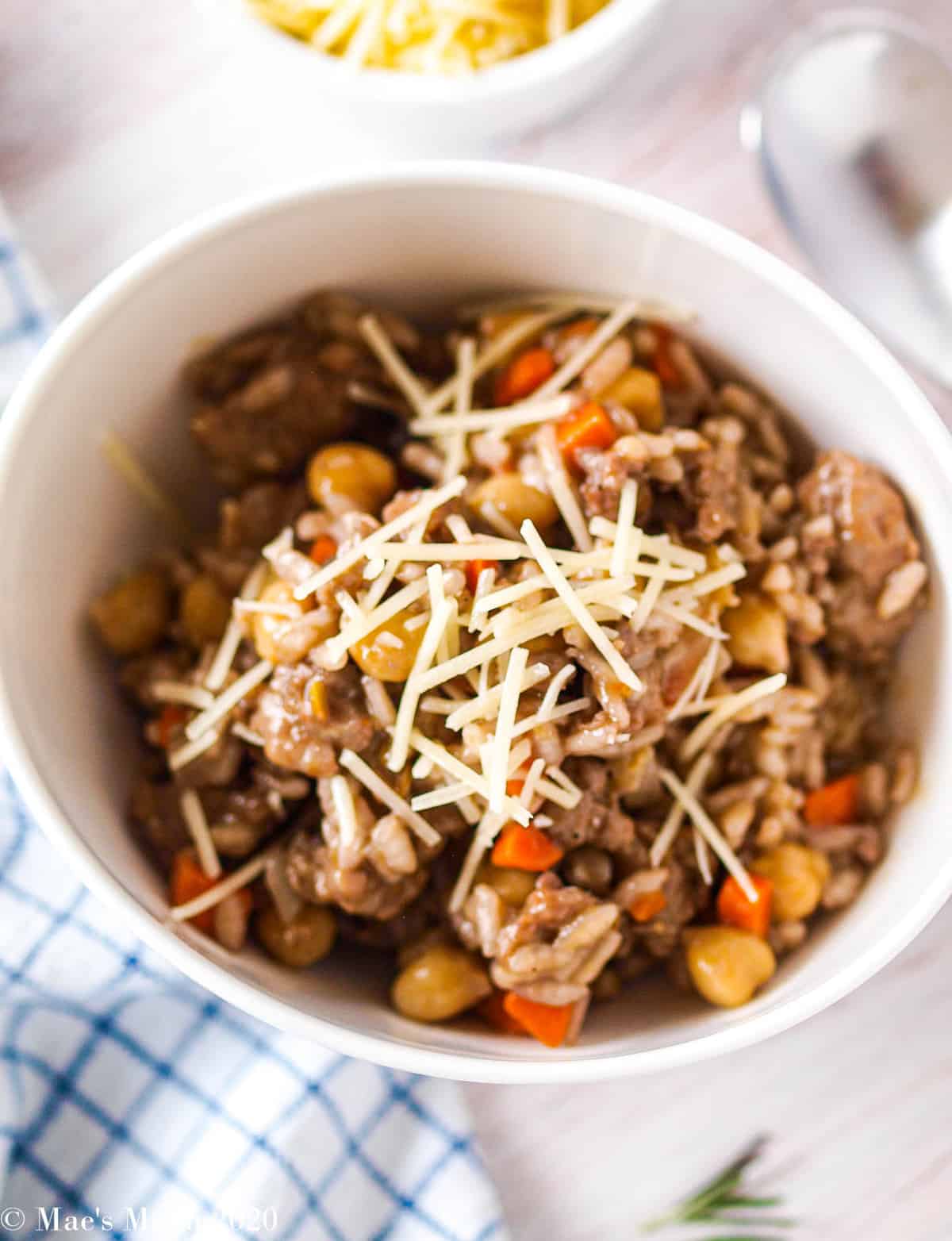


If you liked and made this Italian Sausage Pasta Recipe, don't forget to rate it and let me know how you liked it in the comments. I always love hearing from you!
Recipe Card
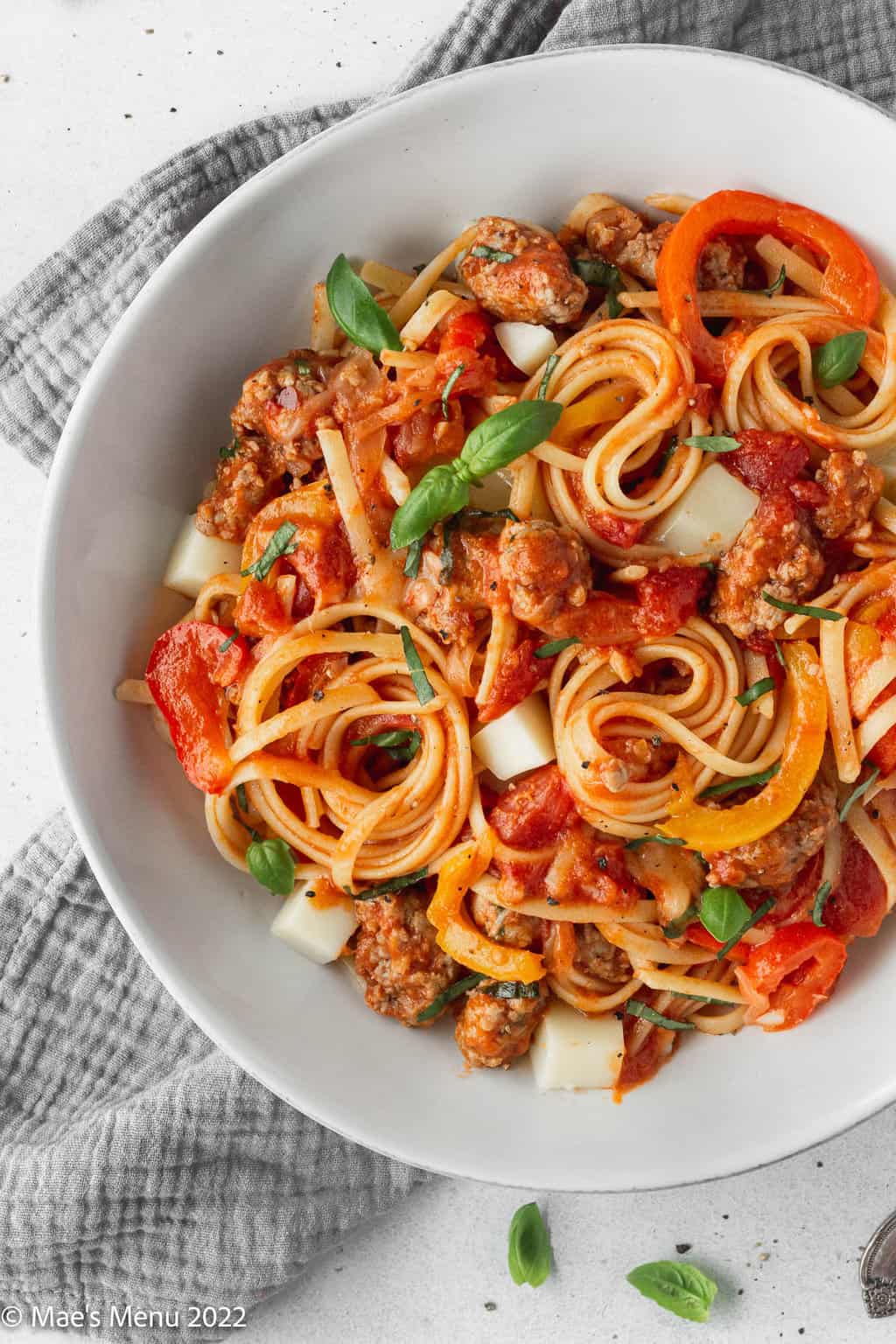
Italian Sausage Pasta

Ingredients
- 8 oz. dried linguine
- 2 tablespoons olive oil
- 2 sweet bell peppers red, orange, or yellow, thinly sliced
- 1 white or yellow onion halved and thinly sliced
- 1 lb. raw sweet Italian pork sausage chicken or pork (bulk or removed from casings)
- 3 cloves garlic minced
- ½ teaspoon red pepper flakes
- 1 28 oz. can whole tomatoes such as San Marzano or Roma Plum (or crushed tomatoes)
- ¾ teaspoon granulated white sugar
- ½ teaspoon salt
- 8 oz. fresh mozzarella cheese cubed
- ½ cup fresh basil sliced or torn
- Additional salt and pepper to taste
Instructions
- Bring a large pot of heavily salted water to a boil. Cook linguine for 2 minutes less than package directions. Drain and set aside.
- While pasta cooks, heat olive oil in a large deep skillet over medium-high heat until shimmering. Add peppers and onions and sauté, stirring continuously, 5–6 minutes until onions soften.
- Add sausage. Cook, crumbling as you stir, 4–5 minutes until cooked through and no longer pink.
- Add garlic and red pepper flakes. Cook 1–2 minutes, stirring, until fragrant.
- Add tomatoes, sugar, and salt. Bring to a simmer. Cook 3–4 minutes, crushing tomatoes as you cook, until sauce reduces by ⅓. Reduce heat to medium.
- Stir in drained pasta. Cook 4–5 minutes, stirring occasionally, until sauce reduces by half and coats the pasta.
- Turn off heat. Stir in mozzarella and fresh basil. Season with salt and pepper. Serve hot.
Notes
- Don't fully cook the pasta — undercook by 2 minutes so it finishes in the sauce.
- Save pasta water — a splash loosens the sauce if it reduces too much.
- Add mozzarella off the heat — keeps it soft and creamy instead of stringy.
- Chicken sausage — substitutes 1:1 for a leaner version. Cook to 165°F internal temperature.
- Jarred sauce shortcut — substitute a 24 oz. jar of marinara for the canned tomatoes; skip the sugar and salt.
- Gluten-free — use your favorite GF pasta, such as garbanzo or brown rice pasta.
- Storage — refrigerate 4–5 days. Freeze up to 2 months (best without the mozzarella — add fresh when reheating).