

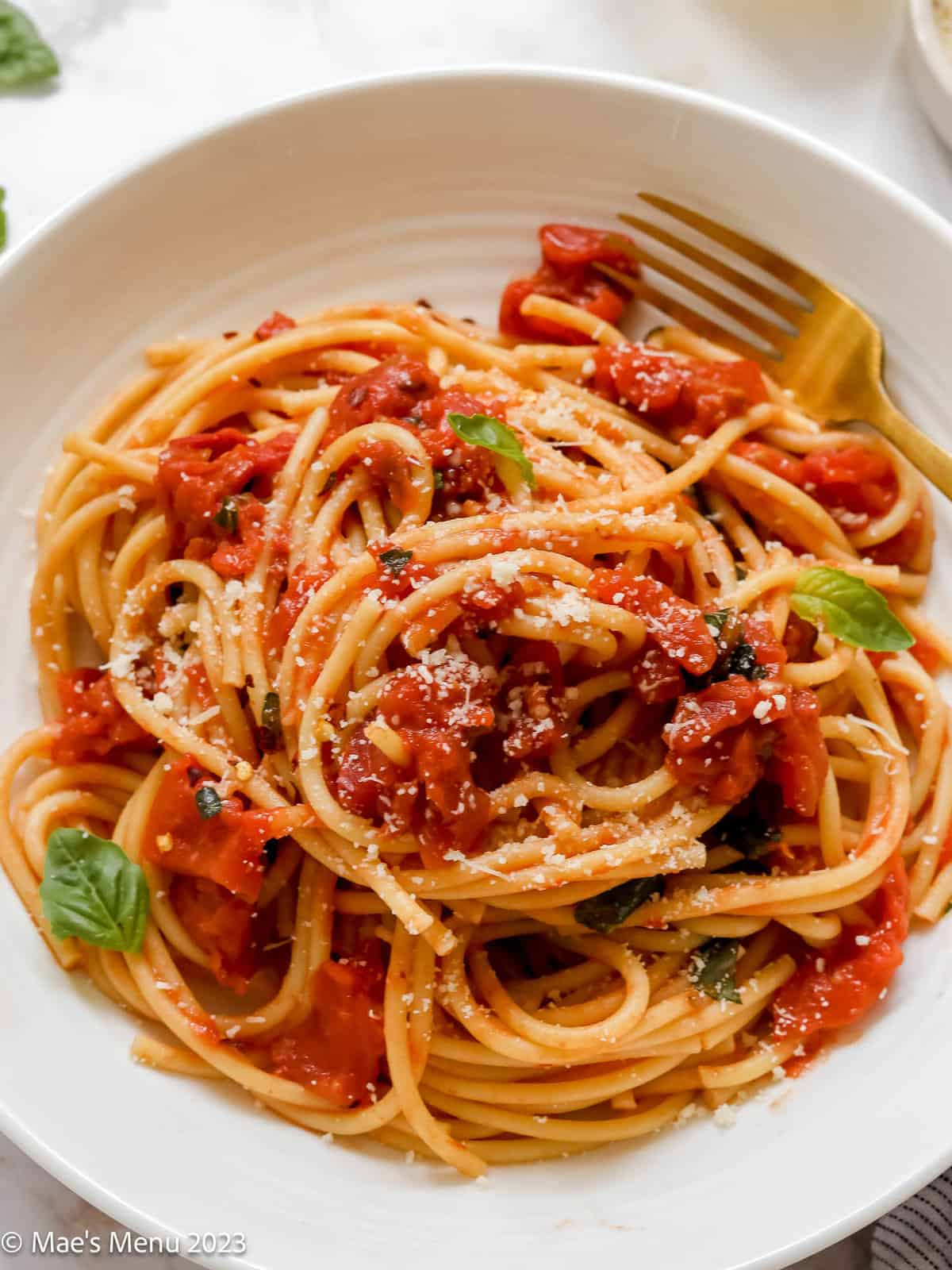
Rich, garlicky, tomato-y, and buttery — this bucatini pomodoro is the pasta recipe that proves simple ingredients done well beat complicated every time.


This post may contain affiliate links. As an Amazon Associate, I earn from qualifying purchases. Please see my disclosure policy for details.
For more pasta recipes, check out my Homemade Pasta Sauce, Turkey Bolognese Sauce, and Roasted Red Pepper Pasta Sauce.
Table of Contents
Pasta is my love language. There's something about a bowl of perfectly sauced pasta that feels like both a weeknight solution and a special occasion at the same time — and this bucatini pomodoro delivers exactly that.
Long gone are the days of simmering tomato sauce for hours; this version is ready in 20 minutes and tastes like you spent all afternoon on it. The magic here is in the method. Butter-sautéed garlic, quality canned tomatoes, a pinch of red pepper flakes, and a finishing shower of parmesan — that's essentially it.
Whether you call it bucatini pomodoro or bucatini al pomodoro, this classic Italian pasta is the definition of simple done perfectly. It's beginner-friendly enough for a busy Tuesday and impressive enough to serve to guests alongside a glass of chianti.
For more pasta night inspiration: Lemon Ricotta Pasta, Garlic Angel Hair Pasta, and Pumpkin Pasta Sauce for something seasonal.
Why You'll Love This Bucatini Pomodoro
- Quick and Easy — Taking just 20 minutes from start to finish, simmering the sauce while the pasta cooks saves time and hassle.
- Made with Pantry Staples — Canned tomatoes, butter, garlic, pasta. That's the whole list.
- Authentic Italian Flavor — So good that your taste buds will transport you to an Italian trattoria!
- Beginner-Friendly — With straightforward steps, even the most novice cook can master this meal. It's foolproof!
- Versatile — Enjoy it for a weeknight dinner, show off with a dinner party centerpiece, or treat your special someone for date night.
- Vegetarian — As written, it's one of my favorite meatless meals. Make it vegan with one easy swap.
Looking for more Italian recipes? Check out my Neapolitan Pizza Dough!
What Is Bucatini Pomodoro?
Also known as bucatini al pomodoro or pasta al pomodoro, bucatini pomodoro translates from Italian to "bucatini with tomato." The dish is made by tossing al dente bucatini pasta in a pomodoro sauce — a buttery, garlic-infused tomato sauce — before being finished with parmesan cheese and torn fresh basil.
Though seemingly simple, pomodoro sauce is perfectly balanced: rich from the butter, bright from the tomatoes, and savory from the garlic and parmesan. It's the kind of dish where every ingredient earns its place, and nothing is there for show.
What is the difference between pomodoro and marinara? Pomodoro sauce is more rustic, tomato-forward, and simpler — made with just tomatoes, garlic, butter, and basil, simmered briefly to keep the flavor fresh and bright. Marinara typically includes onion, oregano, and sometimes anchovies, and is simmered longer to produce a more complex, punchier flavor. Pomodoro is lighter and fresher; marinara has more going on.

All About Bucatini Pasta
Bucatini is the star of this dish — it's not just a spaghetti substitute. In fact, with its hearty, chewy texture, it's my all-time favorite pasta!
What is bucatini? Bucatini is a thick, hollow spaghetti-like pasta with a long hole running through the center. That hollow center is the key — it traps sauce inside every strand, so each bite delivers more flavor than flat pasta ever could, making real difference in the final dish.
Where to buy bucatini — Most major grocery stores carry it in the pasta aisle. You can also find it at Whole Foods, Italian specialty shops, and on Amazon (affiliate link).
Can you substitute spaghetti? Yes, spaghetti works and produces a delicious result — but you lose that sauce-catching magic. Linguine, fettuccine, and pappardelle are better substitutes.
How to cook bucatini properly — Bucatini is thicker than spaghetti and takes slightly longer to cook. Always cook to al dente according to package directions in heavily salted water (i.e., 1 tablespoon of salt for every gallon of water) and reserve plenty of pasta water before draining.
The Tomato Sauce Guide
Pomodoro sauce is deceptively simple, but getting it right is all about ingredient quality and technique (don't worry, it's easy to master!).
Which canned tomatoes to use — Whole peeled San Marzano tomatoes are the gold standard. They're sweeter, less acidic, and meatier than regular canned tomatoes. Brands like Bianco DiNapoli (affiliate link), Pomì, or DOP-certified San Marzano tomatoes are worth the slight price bump. Crushed tomatoes also work if that's what you have.
Why butter instead of just olive oil — Butter adds a richness and roundness to the sauce that olive oil alone can't replicate. It softens the acidity of the tomatoes and creates that silky, restaurant-quality finish. Some recipes use a combination of both — also great.
How long to simmer — 5–10 minutes gives you a bright, fresh pomodoro. 20–30 minutes deepens the flavor if you have more time. Either works beautifully.
The pasta water secret: Always reserve at least 1 cup of pasta cooking water before draining. The starchy water emulsifies the sauce, making it cling to every strand of bucatini. Add it a splash at a time to reach your desired consistency.
How to know when the sauce is ready — It should be thickened, deep red, and smell intensely of garlic and tomato. Taste it before adding the pasta and adjust salt and red pepper flakes as needed.
Important Ingredients and Substitutions

Bucatini — See the full guide above. Spaghetti, linguine, or fettuccine can substitute.
Canned tomatoes — Quality matters here more than almost anywhere else in this recipe. San Marzano if possible — whole peeled or crushed both work.
Unsalted butter — Adds richness and rounds out the sauce's acidity. Extra-virgin olive oil can be used as a vegan substitute, but butter is the authentic choice.
Fresh garlic — Minced fresh cloves, not garlic powder. The flavor of fresh garlic bloomed in butter is one of the best things in cooking.
Fresh basil — Added at the end, keeping it bright and fragrant. Dried basil is not a substitute here—if you don't have fresh, use flat-leaf parsley instead.
Parmesan cheese — Grated is best for melting smoothly into the sauce. For a sharper flavor, use Pecorino Romano.
Recipe Variations
The classic is perfect as written, but here are some great ways to build on it:
- Spicy Arrabbiata — Double the red pepper flakes and add a pinch of cayenne for a properly spicy pomodoro.
- Burrata — Serve the finished pasta topped with fresh burrata and a drizzle of olive oil. Stunning for a dinner party.
- Meaty — Simmer crumbled cooked Italian sausage or ground beef with the tomato and garlic for a heartier version.
- Puttanesca-Adjacent — Add ¼ cup pitted, halved kalamata olives and 2 tablespoons capers with the tomatoes for a brinier, more complex sauce.
- Vegan — Swap the butter for extra-virgin olive oil and finish with vegan parmesan or nutritional yeast.
How to Make Bucatini Pomodoro
For the complete recipe and measurements, scroll to the recipe card at the bottom of this post.
Boil Pasta: Boil the bucatini in heavily salted water according to package directions until al dente. Drain, reserving at least 1 cup of pasta water.

Step 1: While the pasta cooks, melt 2 tablespoons of butter in a large skillet or Dutch oven over medium heat. Once foaming, add the minced garlic and red pepper flakes and sauté for 1–2 minutes until golden and fragrant.

Step 2: Stir in the canned tomatoes. Bring to a simmer and cook for 5–10 minutes, stirring occasionally, until the sauce thickens and turns a deep red color.

Step 3: Reduce heat to low. Stir in the grated parmesan until melted into the sauce.

Step 4: Add the cooked bucatini and toss until evenly coated. Stir in reserved pasta water, a splash at a time, to reach your desired consistency.

Step 5: Top with torn fresh basil and extra parmesan to serve.
Chelsea's Recipe Pro-Tips

- Salt the pasta water heavily — It should taste like the sea. Add at least 1 tablespoon of kosher salt per gallon of water. This seasons the pasta from the inside out.
- Cook al dente — The pasta continues cooking in the hot sauce, so pull it slightly before you think it's done. Overcooked pasta in pomodoro sauce is a tragedy.
- Reserve more pasta water than you think you need — The pasta absorbs the sauce quickly as it sits. Having extra on hand lets you loosen it back up at any point, even when reheating.
- Watch the garlic closely — It goes from golden and fragrant to burnt and bitter fast. Keep the heat at medium and pull it off as soon as it's golden, about 1–2 minutes. Burnt garlic will ruin the sauce.
- Finish with good olive oil — A drizzle of high-quality extra-virgin olive oil over the finished bowl adds a fruity, peppery note that takes it from good to great.

Storage Directions
- Refrigerating: Leftovers keep in an airtight container in the fridge for 4–5 days. The sauce absorbs into the pasta as it sits — add a splash of water or broth when reheating to loosen it up.
- Freezing: Freeze in a freezer-safe container or zip-top bag for up to 3 months. Thaw overnight in the refrigerator and reheat gently with a splash of water.
- Reheating: Microwave in 1-minute intervals on medium-high, stirring between each, until heated through, or warm on the stovetop with a splash of water over medium heat.
Serving Suggestions
This bucatini pomodoro works beautifully as a standalone main with Air Fryer Garlic Bread alongside for sauce mopping — and that's truly all you need. For a heartier meal, serve it next to Baked Panko Chicken for a play on chicken parmesan, or alongside Zucchini Lasagna for a full Italian spread.
For a dinner party, top each bowl with fresh burrata and finish with a glass of Chianti, Babera D'Asti, or Barolo — it'll feel effortlessly elegant for a dish that took 20 minutes.
Bucatini Pomodoro FAQs
Other long pasta shapes work well — linguine, fettuccine, and pappardelle are the closest matches. Spaghetti works too but you lose the hollow center that catches sauce.
Pomodoro sauce is simpler, more rustic, and more tomato-forward — made with just tomatoes, garlic, butter, and basil with a short simmer. Marinara typically includes onion, oregano, and sometimes anchovies, and is simmered longer for a more complex, punchier flavor.
Yes — use about 2 lbs of ripe plum or Roma tomatoes, peeled and roughly crushed. Fresh tomatoes have more water, so simmer the sauce longer (15–20 minutes) until it thickens. San Marzano canned tomatoes are often more consistent in flavor, especially outside of peak tomato season.
Simmer the sauce long enough to thicken before adding the pasta, and don't over-add pasta water. If it's still too loose, let the pasta sit in the sauce for an extra minute over low heat.
The sauce can be made up to 3 days ahead and refrigerated. For the best flavor and texture, cook the pasta fresh and toss with reheated sauce just before serving. Though leftovers can be stored, the pasta has the best texture when enjoyed fresh.
Yes — this recipe is naturally vegetarian. It's also easily made vegan by swapping the butter for olive oil and using vegan parmesan.
Save This Recipe for Later on Pinterest

More Pasta Recipes


If you liked and made this Bucatini Pomodoro Recipe, don't forget to rate it and let me know how you liked it in the comments. I always love hearing from you!
Recipe Card
Bucatini Pomodoro

Equipment
- Garlic press optional
Ingredients
- 16 oz. bucatini
- salt for pasta water
- 2 tablespoons unsalted butter
- 3 cloves garlic minced or pressed
- ¼ teaspoon dried red pepper flakes or to taste
- 28 oz. can chopped or whole peeled San Marzano tomatoes
- ½ cup grated parmesan cheese plus more to garnish
- ⅓ cup fresh basil torn or sliced
Instructions
- Boil the bucatini in heavily salted water according to package directions until al dente. Drain, reserving at least 1 cup of pasta water.
- While pasta cooks, melt butter in a large skillet or Dutch oven over medium heat. Once foaming, add garlic and red pepper flakes. Sauté 1–2 minutes until golden and fragrant.
- Stir in canned tomatoes. Bring to a simmer and cook 5–10 minutes, stirring occasionally, until thickened and deep red.
- Reduce heat to low. Stir in parmesan until melted. Add cooked bucatini and toss until evenly coated. Stir in reserved pasta water a splash at a time to reach desired consistency.
- Top with fresh basil and extra parmesan to serve.
Video
Notes
- Quality tomatoes matter — San Marzano (such as Bianco DiNapoli) are recommended for the best flavor.
- Salt the water well — Adding at least 1 tablespoon kosher salt per gallon seasons the pasta, giving it the best flavor.
- Cook al dente — The pasta will continue cooking in the hot sauce.
- Reserve pasta water — Essential for adjusting sauce consistency and reheating leftovers.
- Bucatini substitute: Can't find bucatini? Use linguine, fettuccine, pappardelle, or spaghetti.
- Vegan: Swap butter for extra-virgin olive oil and use vegan parmesan.
- Gluten-free: Use gluten-free fettuccine or linguine.
- Storage: Refrigerate 4–5 days; freeze up to 3 months. Add a splash of water when reheating.
- Make-ahead: The sauce keeps 3 days refrigerated. Cook pasta fresh and toss to serve.

