

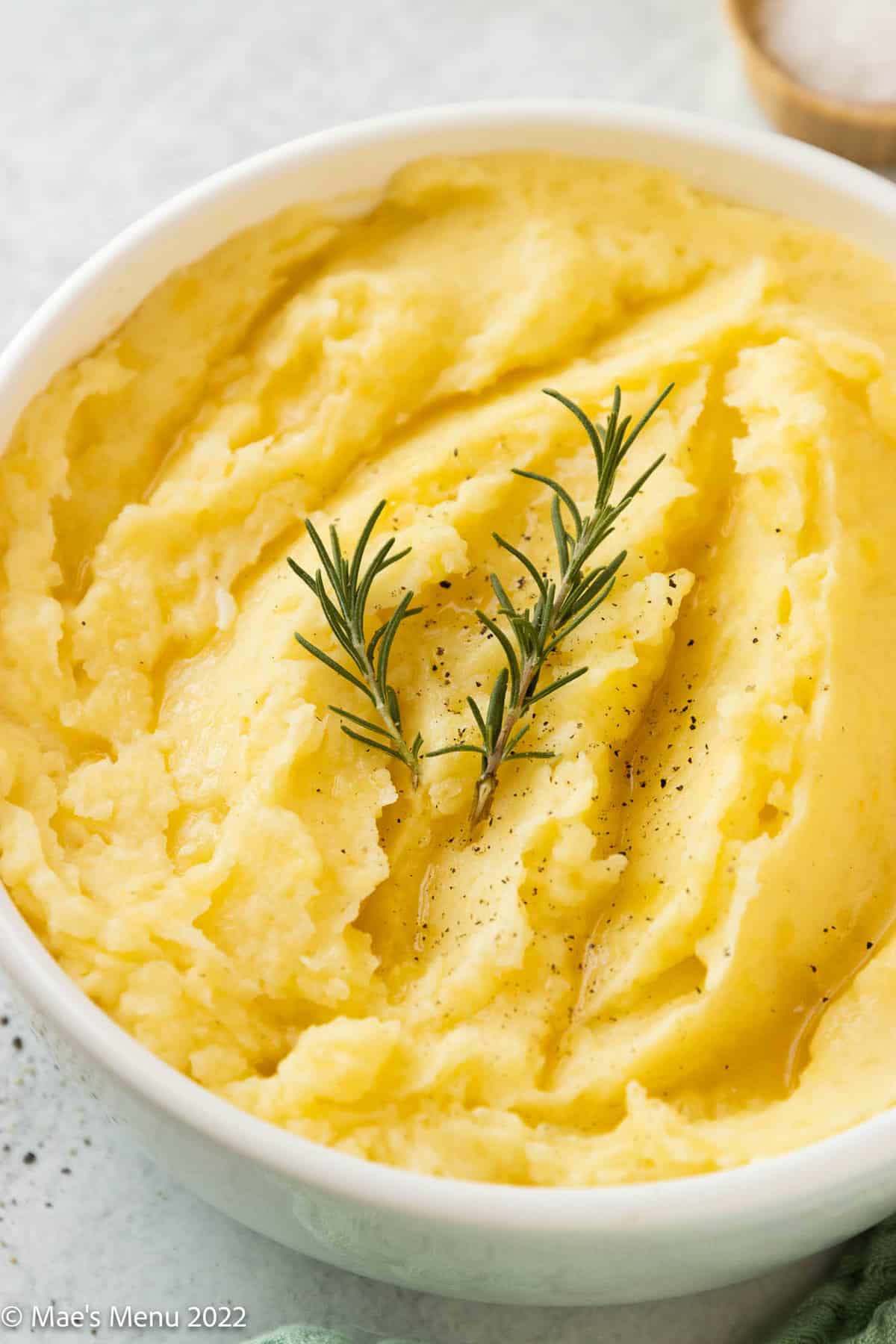
Creamy, buttery, and completely dairy-free — these mashed potatoes without milk taste just like the classic, and nobody will ever know the difference.


This post may contain affiliate links. As an Amazon Associate, I earn from qualifying purchases. Please see my disclosure policy for details.
Table of contents
- At A Glance: Mashed Potatoes without Milk
- Can You Make Mashed Potatoes without Milk?
- The Best Potatoes to Use
- Milk Substitutes for Mashed Potatoes
- Important Ingredients and Substitutions
- Recipe Variations
- Storage Directions
- Serving Suggestions
- Save this Recipe for Later on Pinterest
- More Potato Recipes
- Recipe Card
For more mashed potato recipes, check out my Mashed Potatoes Without Butter and Cream Cheese Mashed Potatoes. For an easy roasted potato side, try my Portuguese Potatoes.
At A Glance: Mashed Potatoes without Milk
- Prep Time: 10 minutes
- Cook Time: 15 minutes
- Total Time: 25 minutes
- Makes: 4-5 servings
- Nutrition (per serving): 178 calories | Protein: 3g | Fat: 9g | Carbs: 23g | Fiber: 2g
- What it Tastes Like: Creamy, garlicky, and buttery — exactly like classic mashed potatoes
- Why You'll Love It: All the creamy, savory flavor of traditional mashed potatoes without any milk or cream — perfect for dairy-free, lactose-intolerant, and vegan diners alike.
- Difficulty Level: About as hard as boiling water
I used to be firmly in the mashed potato-averse camp — until marathon training flipped everything upside down. Suddenly, I was constantly craving carbs, and potatoes became my best friend for the electrolytes, potassium, and energy they provide. When I was pregnant and couldn't do lactose, I got to work creating dairy-free versions of my favorite dishes — including these mashed potatoes without milk.
The result was so good that even now, years later and fully back to eating lactose, I still make them this way. Why mess with something that works? These dairy-free mashed potatoes have all the creaminess and none of the tummy troubles — no milk, no cream, no butter. Chicken or veggie broth replaces the milk and adds savory depth, vegan butter keeps the richness, and mayo is the secret weapon that delivers the silky creaminess milk normally would.
The result is so close to the classic that guests at your holiday table will genuinely not be able to tell the difference. This recipe is also perfect for anyone who is lactose intolerant — completely lactose-free without sacrificing any flavor.
For more holiday side dishes: Fresh Green Bean Casserole, Wild Rice Stuffing, Roasted Brussels Sprouts and Sweet Potatoes, and Portuguese Potatoes.

Can You Make Mashed Potatoes without Milk?
You absolutely can — and honestly, you might not even miss it. The trick is knowing what to swap in. Chicken or veggie broth replaces the liquid, vegan butter keeps the richness, and mayo is the secret weapon that delivers the creamy, silky texture milk normally would. The result tastes just like classic mashed potatoes. Nobody at your table will know the difference — I promise.
The Best Potatoes to Use
For the creamiest mashed potatoes without milk, Yukon gold potatoes are the top choice. Their naturally rich, buttery flavor and creamy texture make them perfect for a smooth, velvety mash — and honestly, I just don't think russets can compete on flavor. Yukons have that naturally buttery quality that russets lack, which is why they're my go-to every time.
Red potatoes work as a substitute but produce a slightly different, denser texture. If you go this route, try leaving some of the skins on for a rustic look.
A note on russets: they're high-starch, which makes them fluffy, but that same starch content makes them more prone to becoming gummy if overmixed or if too much liquid is added. For this dairy-free version especially, where we're using broth instead of milk, Yukons are more forgiving and give you a more reliably creamy — and more flavorful — result.

Milk Substitutes for Mashed Potatoes
This recipe uses broth + vegan butter + mayo — the combination I've tested and found works best. The options below are good alternatives if you're substituting on your own or working with what you have on hand.
Chicken or vegetable broth — The best all-around substitute. Adds savory depth and richness that plain milk doesn't. Use low-sodium so you can control the salt.
Vegan butter — Provides the richness and fat that makes mashed potatoes feel indulgent. Earth Balance and Miyoko's are both excellent options.
Mayonnaise — The secret weapon. Full-fat mayo adds the silky, creamy texture that milk normally provides. Use classic, olive oil, or avocado oil mayo — or swap for vegan mayo to make it fully plant-based.
Oat milk or almond milk — Neutral-flavored non-dairy milk alternatives that work well if you prefer a more traditional liquid substitute. Use unsweetened and unflavored varieties only.
Dairy-free sour cream — Adds a tangy twist and creamy texture. Great if you want something a little more interesting than the classic profile.
Olive oil — A simple, light option. Works best combined with broth rather than on its own.
Important Ingredients and Substitutions

Yukon gold potatoes — The ideal potato for this recipe. Their natural creaminess and lower starch content compared to russets means they mash smoothly without going gluey. Peel and cut into even 1-inch cubes for consistent cooking.
Chicken broth — Replaces the milk and adds savory flavor the potatoes absorb as you mash. Always use low-sodium so you can control the saltiness. Swap for vegetable broth for a fully vegetarian or vegan version.
Vegan butter — Gives these dairy-free mashed potatoes their classic buttery taste. Earth Balance and Miyoko's both have a creamy texture that melts beautifully. Regular butter works if you're just avoiding milk specifically and don't need to be fully dairy-free.
Mayonnaise — The real secret to creamy mashed potatoes without milk or cream. Full-fat classic mayo gives you the richest result. Light mayo, olive oil mayo, or avocado oil mayo all work. For vegan, swap in your favorite vegan mayo — the texture difference is minimal.
Garlic cloves — Cooked whole with the potatoes so the flavor mellows and becomes subtly sweet rather than sharp. Don't skip them and don't remove them before mashing — they add essential depth.
Recipe Variations
These dairy-free mashed potatoes are wonderful as-is, but here are easy ways to make them your own:
- Vegan — Use vegetable broth instead of chicken broth and vegan mayo instead of regular. Everything else stays the same.
- Roasted Garlic — Omit the raw garlic cloves when boiling and add 4–6 roasted garlic cloves before mashing instead. Sweeter, deeper, and more complex.
- Herby — Stir in up to 2 tablespoons of fresh diced chives or thyme before serving for a fresh, bright finish.
- "Cheesy" — Add ½ cup vegan parmesan before mashing for a rich, savory, cheesy flavor without any dairy.
- Skin-On — Skip peeling for extra texture and fiber. Works especially well with Yukon golds — the skins are thin enough to be barely noticeable.
How to Make [NAME OF RECIPE]
For the complete recipe and measurements, scroll to the recipe card at the bottom of this post.

Step 1: Add the cubed potatoes to a colander and rinse thoroughly under cold water. Drain.

Step 2: Add the rinsed potatoes and whole smashed garlic cloves to a large pot or Dutch oven. Cover with cold water and stir in 1 teaspoon of salt.
Bring to a boil over high heat. Boil for 14–16 minutes, until the potatoes are fork-tender.

Step 3: Drain the potatoes and garlic. Return them to the warm pot for 1–2 minutes to let any excess moisture steam off, then transfer to a large mixing bowl or stand mixer bowl. Add the remaining ¼ teaspoon salt, ¼ cup broth, vegan butter, and mayonnaise.

Step 4: Mash with a hand masher or whip with the stand mixer's whisk attachment until smooth and creamy, adding more broth a tablespoon at a time until you reach your preferred consistency.

Step 5: Taste and adjust salt as needed. Serve hot.
Chelsea's Recipe Pro-Tips

- Rinse the potatoes before boiling — A quick rinse removes excess surface starch, which is the #1 cause of gluey mashed potatoes. Takes 10 seconds and makes a real difference.
- Start with cold water — Adding potatoes to cold water and bringing everything to a boil together ensures even cooking from the inside out. Hot water cooks the outside before the inside is ready.
- Don't remove the garlic — Those whole cloves soften and mellow completely during boiling and become sweet and creamy when mashed in. They add the kind of depth that makes people ask what's in these potatoes.
- Steam off the excess moisture — After draining, return the potatoes to the warm pot for 1–2 minutes before mashing. This dries them out slightly so they absorb the broth and butter more readily and don't end up watery.
- Don't overmix — This is the biggest mistake with mashed potatoes. Overworking the potatoes releases too much starch and turns them into glue. Mash just until smooth and fluffy, then stop.
- Choose your mashing method — A hand masher gives you a rustic, slightly chunky texture. A stand mixer with the whisk attachment gives you light, whipped, restaurant-style mashed potatoes. A potato ricer gives you the smoothest, most velvety result of all. All three work — it just depends on the texture you're going for.
- Add broth gradually — Start with ¼ cup and add more a tablespoon at a time. You can always add more liquid, but you can't take it out. Broth temperature matters too — warm broth incorporates more smoothly than cold.
- Make-ahead for the holidays — These reheat beautifully. Make them up to 2 days ahead and store covered in the fridge. Reheat with a splash of broth stirred in to restore creaminess — they'll taste just-made.
Storage Directions
- Refrigerating: Store leftovers in an airtight container in the refrigerator for up to 3–4 days.
- Freezing: Freeze in a freezer-safe container for up to 2 months. Thaw in the refrigerator overnight before reheating.
- Reheating: Mashed potatoes dry out as they sit. Stir in 1–2 tablespoons of chicken or vegetable broth (or a splash of oat milk or almond milk) before reheating in the microwave in 1-minute intervals, stirring between each, until heated through and creamy again.

Serving Suggestions
These dairy-free mashed potatoes are the perfect holiday side — pair them with Bacon Wrapped Pork Tenderloin or The Juiciest Roasted Turkey Breast for a full Thanksgiving or Sunday supper spread. They're also fantastic alongside Soft & Fluffy Dinner Rolls and your favorite gravy for a complete comfort food dinner that happens to be completely dairy-free.
For a weeknight-friendly version of the same meal, these come together quickly enough to pair with any weeknight protein — sliced grilled chicken, a simple roast, or even a hearty soup on the side.
Mashed Potatoes without Milk FAQs
Yes — and they can be just as creamy. The key is using the right substitutes: chicken or vegetable broth adds savory depth, vegan butter provides richness, and mayo adds the silky creaminess that milk normally would. The combination is so close to the classic that most people won't notice the difference.
For this recipe, I've tested many variations, and the combination of low-sodium chicken broth + vegan butter + mayo is the winning formula. The broth replaces the liquid, the butter adds fat and richness, and the mayo delivers silkiness. If you'd prefer a single milk-style substitute, unsweetened oat milk or almond milk are the most neutral-tasting non-dairy milk alternatives for mashed potatoes.
As written, no — the recipe uses chicken broth and regular mayo. To make them fully vegan, swap the chicken broth for vegetable broth and use vegan mayo. Everything else (including the vegan butter) is already plant-based.
Yes — this is one of the best make-ahead side dishes for the holidays. Make them up to 2 days ahead and refrigerate in an airtight container. Reheat with 1–2 tablespoons of broth stirred in per serving, in the microwave or in a pot on the stovetop over low heat. They'll taste freshly made.
Almost always one of three causes: overmixing, using too much liquid too fast, or using the wrong potato. Use Yukon golds (not russets for this recipe), rinse before boiling, add liquid gradually, and stop mashing as soon as the potatoes are smooth. A stand mixer or hand mixer makes this easier to control than a food processor, which tends to overwork them.
Russets can work — they're high-starch, which makes them fluffy — but they're also more prone to becoming gluey in this dairy-free version where we're using broth instead of milk. Yukon golds are more forgiving and give a more reliable, creamy result. If you use russets, be careful not to overmix and add the broth very gradually.
Save this Recipe for Later on Pinterest

More Potato Recipes


If you liked and made this Mashed Potatoes without Milk Recipe, don't forget to rate it and let me know how you liked it in the comments. I always love hearing from you!
Recipe Card
Mashed Potatoes Without Milk (Creamy, Dairy-Free!)

Ingredients
- 1 ½ lbs Yukon gold potatoes peeled and cut into 1-inch cubes (about 3 medium potatoes)
- 3 cloves garlic peeled and smashed
- 1 ¼ teaspoon salt divided
- ¼- ½ cup low sodium chicken broth or vegetable broth (plus more as needed)
- 1 ½ tablespoons vegan butter such as Earth Balance or Miyoko's
- 3 tablespoons mayonnaise classic, olive oil, avocado oil, or vegan mayo
Instructions
- Add the cubed potatoes to a colander and rinse thoroughly under cold water. Drain.
- Add the potatoes and smashed garlic cloves to a large pot or Dutch oven. Cover with cold water and stir in 1 teaspoon of salt.
- Bring to a boil over high heat. Boil for 14–16 minutes, until the potatoes are fork-tender.
- Drain the potatoes and garlic. Return them to the warm pot for 1–2 minutes to steam off excess moisture, then transfer to a large mixing bowl or stand mixer bowl.
- Add the remaining ¼ teaspoon salt, ¼ cup broth, vegan butter, and mayonnaise. Mash with a hand masher, or whip with a stand mixer's whisk attachment, until smooth and creamy. Add more broth 1 tablespoon at a time to reach your preferred consistency.
- Taste and adjust salt as needed. Serve hot.
Notes
- Vegan: Use vegetable broth and vegan mayo. The vegan butter is already plant-based.
- Don't remove the garlic — it softens completely during boiling and adds essential depth when mashed in.
- Rinse before boiling — removes surface starch and prevents gluey texture.
- Add broth gradually — start with ¼ cup, add more by the tablespoon. You can always add more, but you can't take it out.
- Mashing methods: Hand masher = rustic and slightly chunky. Stand mixer with whisk attachment = light and whipped. Potato ricer = the smoothest, most velvety result.
- Don't overmix — mash just until smooth. Overworking releases starch and turns them gluey.
- Make-ahead: Make up to 2 days ahead. Refrigerate covered. Reheat with 1–2 tbsp broth stirred in per serving.
- Storage: Refrigerate in an airtight container for up to 3–4 days. Freeze for up to 2 months.
- Reheating: Microwave in 1-minute intervals, stirring between each, with a splash of broth to restore creaminess.

considering trying this recipe, but is the potato info backward? I had always heard russet potatoes gave the fluffiest baked and mashed potatoes while red potatoes tend to get gummy and not fluffy. I could be wrong.
Hi Rose,
The potato information is correct! I always prefer to make my mashed potatoes with Yukon golds — they give the potatoes a buttery, smooth, and creamy texture. Russets can be too starchy for my liking, but you're welcome to sub them if that's your preference. Rinse the cubed potatoes well before boiling and drain them well after to prevent them from getting gluey.
Hope this helps!
All the best,
Chelsea