

Spongy, moist, and drenched in a bright homemade lemon glaze — this lemon poke cake is the most refreshing summer dessert you'll make all season. No Jello required.


This post may contain affiliate links. As an Amazon Associate, I earn from qualifying purchases. Please see my disclosure policy for details.
For more easy summer desserts, check out my Pineapple Poke Cake, Strawberry Cobbler, and Plum Crisp.
Table of Contents
I'll be honest — I was skeptical about poke cake for a long time. It conjured images of soggy, flavorless church potluck disasters. Then I made this lemon version and ate three pieces standing at the counter and had to rethink everything I thought I knew.
This lemon poke cake uses a homemade lemon glaze instead of Jello or pudding mix, giving you a fresher, more natural flavor that actually tastes like real lemons. The cake itself is a hybrid — yellow or white cake mix boosted with extra flour, sour cream, fresh lemon juice, and lemon zest, which makes it moister and more flavorful than any standard box cake. Poke holes across the warm cake, pour the warm glaze over, let it soak in, then top with whipped cream. That's it.
For more lemon favorites: Lemon Blueberry Bread, Strawberry Lemonade Bars, and Lemon Sugar Cookies.

What is Lemon Poke Cake?
A lemon poke cake is a baked cake that gets holes poked across the top while still warm, then a glaze or liquid filling is poured over and allowed to soak into every hole. The result is a cake that's incredibly moist throughout — not just on top — with flavor in every single bite. Once cooled, it's topped with a billowy layer of whipped cream, making it feel equal parts refreshing and indulgent.
This version uses a homemade lemon glaze made from confectioners' sugar, fresh lemon juice, and a splash of milk. Unlike most poke cake recipes that use Jell-O or instant pudding, the homemade glaze gives you a brighter, more natural lemon flavor with no artificial ingredients or colors.
Why Is It Called Poke Cake?
Exactly what it sounds like — you poke it. After the cake bakes, you use a chopstick, wooden skewer, or the thin handle of a wooden spoon to poke holes across the entire surface while the cake is still hot.
The filling gets poured in, soaks down through the holes, and infuses the whole cake with flavor and moisture. A simple technique that makes a huge difference in the final result.

The Lemon Glaze
The easy, homemade lemon glaze is the heart of this recipe — and what makes this version stand out from every Jello-based poke cake out there.
|
What's In It |
Confectioners' sugar, fresh lemon juice, and a splash of whole milk. |
|
Why Homemade Reigns Supreme |
Jello gives you an artificial, candy-like sweetness. A homemade glaze made with real lemon juice tastes bright, tangy, and genuinely lemony — like the best homemade lemonade. |
|
Ideal Consistency |
The glaze should be pourable but not watery — think honey or a thin drizzle. If it's too thick, add milk ½ teaspoon at a time. If too thin, add a touch more confectioners' sugar. |
|
The Temperature |
A warm glaze soaks into a warm cake more deeply and evenly than a cold glaze on a cooled cake. Make the glaze while the cake finishes baking and work quickly after you pull it from the oven. |
|
How Long to Soak |
Let the glazed cake cool completely to room temperature before adding the whipped cream — at least 1–2 hours, or refrigerate overnight. The longer it sits, the more the glaze absorbs, and the more flavorful the cake becomes. |

The Poking Technique
Use a chopstick or wooden skewer to poke holes every inch across the warm cake — going about ¾ of the way down but not all the way through.
Next, pour the warm lemon glaze slowly over the surface, letting it seep into each hole. The warmer the cake and glaze, the better the absorption.
Number of holes: Err on the side of more rather than fewer. More holes = more glaze absorption = more flavor in every bite.
What tool: A chopstick or wooden skewer works best — thin enough to create defined holes without tearing the cake. Avoid using the tines of a fork, which creates too many small tears.
Cake Mix vs. From Scratch
This recipe uses a box of yellow or white cake mix as the base — and intentionally so. The mix provides a reliable, tender crumb that would take significantly more effort to replicate from scratch.
This isn't a standard box cake, though — the addition of extra flour, sour cream, lemon juice, and lemon zest transforms it into something that tastes completely homemade.
|
Type of Cake Mix |
Yellow cake mix gives a slightly richer, more buttery flavor. White cake mix is lighter and lets the lemon shine more. Both work beautifully. |
|
Can You Make Homemade Cake? |
Yes — substitute a homemade white or yellow cake batter and add the same lemon juice and zest. Adjust flour accordingly. |
|
Can You Make it Gluten-Free? |
Certainly — use a gluten-free cake mix and a 1:1 GF flour blend. Look for a GF mix equivalent to a standard 16 oz. box — some GF mixes are smaller. Let the mix rest at room temperature for 30 minutes before baking. |
Important Ingredients and Substitutions

Sour cream — The secret to an incredibly moist cake. It adds fat and tenderness that standard box cake directions don't include. Full-fat Greek yogurt substitutes 1:1.
Fresh lemon juice — Used in both the cake batter and the glaze. Fresh is strongly preferred — it's noticeably brighter and more flavorful than bottled. You'll need about 4–5 lemons total.
Fresh lemon zest — Adds an aromatic, floral lemon flavor that juice alone can't replicate. Use a microplane for the finest zest.
Confectioners' sugar — The base of the glaze. Also called powdered sugar. Don't substitute granulated sugar — it won't dissolve properly.
Heavy whipping cream — Must be cold for the whipped cream to whip properly. Pull it straight from the fridge. Heavy cream and heavy whipping cream are the same product — either works
Recipe Variations
- Lemon Pudding — Substitute the homemade lemon glaze with 1 package of prepared lemon instant pudding mixed to a thin, pourable consistency. Pour over warm cake.
- Lemon Jello — The traditional version! Dissolve 1 package of lemon Jello in 1 cup of boiling water, let cool slightly, and pour over the warm poked cake.
- Strawberry Lemon — Top the whipped cream with fresh sliced strawberries and a drizzle of strawberry sauce for a beautiful summer combination.
- Blueberry Lemon — Fold fresh or frozen blueberries into the batter before baking, then top with fresh blueberries and whipped cream.
- Lemon Cream Cheese — Replace the whipped cream topping with cream cheese frosting: beat 8 oz. softened cream cheese with 1 cup powdered sugar, 1 tablespoon lemon juice, 1 teaspoon fresh lemon zest, and a splash of heavy cream until fluffy.
How to Make Lemon Poke Cake
For the complete recipe and measurements, scroll to the recipe card at the bottom of this post.
Bake the Cake

Step 1: Preheat the oven to 350°F. Prepare a 9x13-inch cake pan with nonstick cooking spray or grease with butter and dust with flour.

Step 2: In a large bowl, whisk together the cake mix, flour, sugar, and salt until combined.

Step 3: Add the eggs, melted butter, whole milk, sour cream, lemon juice, and lemon zest.

Step 4: Whisk until smooth and combined.

Step 5: Pour the batter into the prepared pan. Bake 38–40 minutes until a toothpick inserted in the center comes out clean.
Make the Lemon Glaze

Step 6: While the cake is still hot, whisk together the confectioners' sugar, lemon juice, and whole milk in a bowl until smooth.

Step 7: Remove the cake from the oven and place on a wire rack. Immediately poke holes every inch across the surface using a chopstick or wooden skewer, going about ¾ of the way down.

Step 8: Pour the lemon glaze over the hot cake.

Step 9: Spread the glaze evenly over the cake. Let it cool completely to room temperature.
Make the Whipped Cream

Step 10: In a large bowl or stand mixer, whip the cold heavy cream with the powdered sugar and vanilla extract until stiff peaks form, about 1–2 minutes.

Step 11: Spread the whipped cream over the cooled cake. Refrigerate at least 1–2 hours before serving.
Chelsea's Recipe Pro-Tips

- Pour the glaze warm — Make the glaze while the cake is still in the oven so both are warm at the same time. Warm glaze on a warm cake soaks in the deepest.
- More holes = more flavor — Don't be shy with the poking. The more holes you create, the more glaze gets into the cake. Every bite should be glazed through.
- Cool completely before whipped cream — The whipped cream will melt and slide off a warm cake. Let the glazed cake come fully to room temperature before topping. The refrigerator is your friend here — chill for 30-60 minutes if you're impatient.
- Keep the cream cold — Heavy cream only whips properly when cold. If your kitchen is warm, chill the mixing bowl in the freezer for 10 minutes before whipping.
- Make it ahead — This cake is better the next day. The glaze has more time to absorb and the flavors deepen. Make the night before any party and refrigerate until serving.
Make-Ahead Guide
Lemon poke cake is one of the best make-ahead desserts for summer entertaining — it actually improves overnight as the glaze fully absorbs into the cake.
- Up to 24 hours ahead: Bake, poke, glaze, and cool completely. Cover tightly and refrigerate. Add the whipped cream topping just before serving.
- Transport tips: Keep refrigerated until you're ready to leave. The cake travels well in the pan when tightly covered with plastic wrap or foil. Bring the whipped cream separately if making for an outdoor event in the heat.
- How long it keeps: 3–4 days covered in the refrigerator.
- Freezing: Freeze the glazed cake without the whipped cream topping for up to 2 months. Wrap tightly in plastic wrap and then foil. Thaw overnight in the refrigerator and top with fresh whipped cream before serving.

Storage Directions
- Refrigerating: Store covered in an airtight container or tightly covered pan for 3–4 days.
- Freezing: Freeze without whipped cream for up to 2 months. Thaw overnight in the refrigerator, then top with fresh whipped cream before serving.
Serving Suggestions
This lemon poke cake is a natural fit for any summer gathering — Memorial Day, Fourth of July, birthdays, or just a Tuesday when you need something bright and crowd-pleasing. For a full summer dessert spread, pair it with Peach Bread Pudding for a tasty warm-and-cold combo.
Lemon Poke Cake FAQs
Yes — that's exactly what this recipe does. A homemade lemon glaze made from confectioners' sugar, fresh lemon juice, and a splash of milk soaks into the cake instead. It gives you a brighter, more natural lemon flavor than any Jell-O version.
Yep — and it's actually better made ahead. Bake, poke, and glaze the cake up to 24 hours ahead, then refrigerate, covered. The glaze needs time to fully absorb, so overnight is ideal. Add the whipped cream just before serving.
Yes — Cool Whip substitutes 1:1 for the homemade whipped cream topping. Spread directly over the cooled cake and refrigerate as directed.
A 9x13-inch pan — the standard size for a sheet cake that feeds 12.
Yes — freeze without the whipped cream topping for up to 2 months. Wrap tightly and thaw overnight in the refrigerator. Top with fresh whipped cream before serving
Yes — use a gluten-free cake mix and a 1:1 GF flour blend. Look for a GF mix equivalent to a standard 16 oz. box, as some GF mixes are smaller, and let the batter rest for 30 minutes before baking.
Save This Recipe for Later on Pinterest

More Summer Desserts


If you liked and made this Lemon Poke Cake Recipe, don't forget to rate it and let me know how you liked it in the comments. I always love hearing from you!
Recipe Card
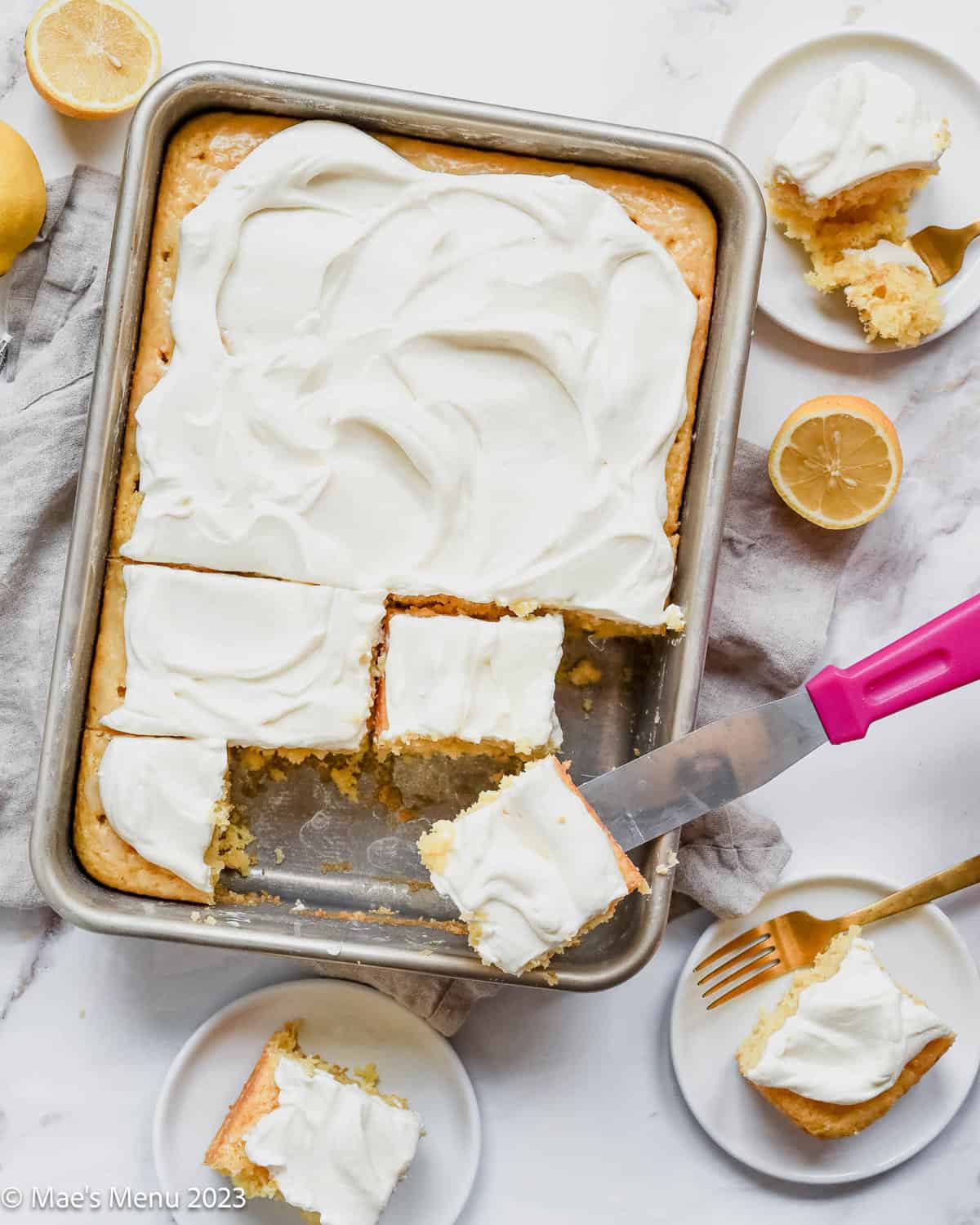
Lemon Poke Cake (No Jello!_

Ingredients
Lemon Cake
- 1 16 oz. package yellow or white cake mix
- 1 cup (120g) all-purpose flour + additional for preparing the cake pan
- 1 cup granulated sugar
- ½ teaspoon salt
- 3 large eggs
- ¼ cup unsalted butter melted
- 1 cup whole or 2% milk
- 1 cup sour cream
- ⅓ cup fresh lemon juice
- 1 tablespoon fresh lemon zest
Lemon Glaze
- 2 cups confectioner's sugar
- 3 tablespoons fresh lemon juice
- 4 teaspoons whole milk
Whipped Cream Frosting
- 1 cup heavy whipping cream cold
- ⅓ cup confectioners' sugar
- ½ teaspoon pure vanilla extract
Instructions
Bake the Cake
- Preheat oven to 350°F. Grease a 9x13-inch pan with nonstick spray or butter and flour.
- In a large bowl, whisk together the cake mix, flour, sugar, and salt.
- Add the eggs, melted butter, milk, sour cream, lemon juice, and lemon zest. Whisk until smooth.
- Pour into the prepared pan. Bake 38–40 minutes until a toothpick inserted in the center comes out clean.
Make the Lemon Glaze
- While the cake bakes, whisk together the confectioners' sugar, lemon juice, and milk until smooth.
- Remove the cake from the oven. Immediately poke holes every inch across the surface with a chopstick or wooden skewer, going about ¾ of the way down.
- Pour the warm glaze over the hot cake, spreading evenly. Let cool completely to room temperature.
Make the Whipped Cream
- Beat the cold heavy cream with confectioners' sugar and vanilla until stiff peaks form, about 1–2 minutes.
- Spread over the cooled cake. Refrigerate at least 1–2 hours before serving.
Notes
- Poke while hot — Poke the cake immediately out of the oven and pour the glaze while both are warm for maximum absorption.
- Cool before topping — The cake must be fully cooled to room temperature before adding whipped cream, or it will melt.
- Make ahead — Bake, poke, and glaze up to 24 hours ahead. Add whipped cream just before serving.
- Cool Whip — Substitutes 1:1 for the homemade whipped cream.
- Sour cream sub — Full-fat Greek yogurt works 1:1.
- Gluten-free — Use a GF cake mix (equivalent to 16 oz.) and a 1:1 GF flour blend. Let the batter rest for 30 minutes before baking.
- Storage — Refrigerate covered 3–4 days. Freeze without whipped cream for up to 2 months.


This was a delicious dense cake with a wonderful lemon flavor. I was a little confused by the instructions for the glaze so I just added 6 tablespoons of lemon juice. I will definitely make it again. Thank you for the recipe.
Hi, Angela!
So glad that you liked the cake! Thanks for letting me know about the glaze -- somehow the milk got deleted from the recipe instructions. I added it in -- 4 teaspoons of whole milk should be mixed with the lemon juice and confectioner's sugar before being poured onto the hot cake.
Hope this helps!
Best,
Chelsea