

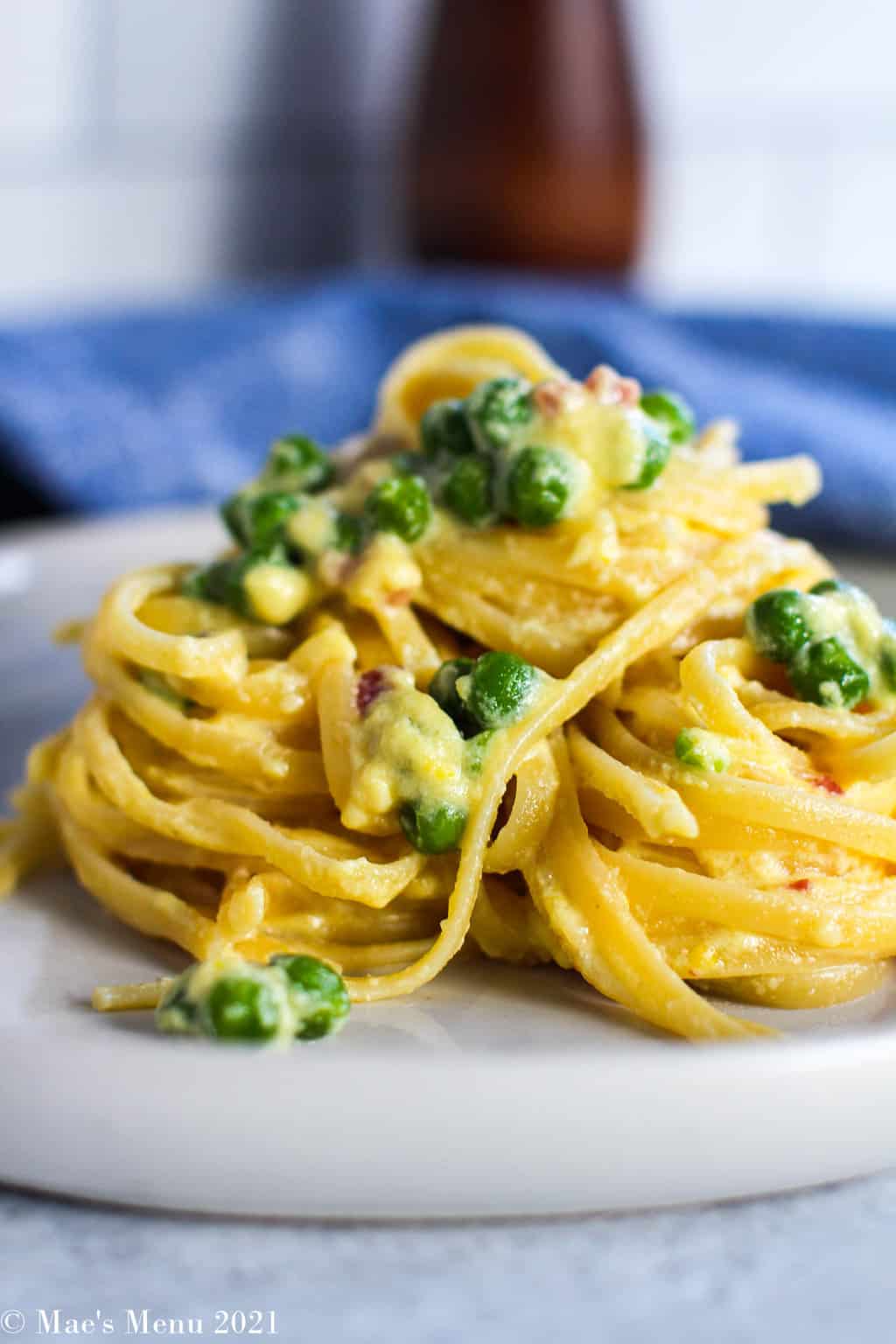
Indulge in this decadent, quick-fix Lemon Ricotta Pasta–it’s my secret to making a less than 20-minute gourmet-tasting meal on weeknights! Made with homemade lemon ricotta sauce, tender noodles, crispy pancetta, and juicy peas, you’ll feel like you’re dining out.


This post was originally published on February 20, 2021. It was updated with new recipe information on December 16, 2024.
This post may contain affiliate links. As an Amazon Associate, I earn from qualifying purchases. Please see my disclosure policy for details.
Table of contents
This tasty pasta with ricotta and lemon delivers gourmet flavor without the fuss. It’s ready in less 20 minutes and requires fewer than 10 ingredients! In other words, the ideal amount of time to create a delicious family meal when you’re low on energy during the week.
The custard-like sauce, made with creamy ricotta, bright lemon, and savory parmesan, clings perfectly to tender pasta and delivers a luscious texture. The flavor is so good, you’ll family will think you spent all day in the kitchen–shhh, I won’t tell!
The rich sauce is balanced with the crisp saltiness of pancetta and the subtle sweetness of cooked peas. Who doesn’t love easy recipes using ricotta cheese on a weeknight?! Whip up this elegant-looking meal any night of the week for family dinners or a quick dinner party showstopper!
For more recipes using lemon, check out my Honey Garlic Lemon Pepper Chicken Thighs, Warm Kale Salad with Lemon Tahini Dressing, or Oven-Fried Lemon Panko Breaded Chicken Tenders.
The Best Pasta for Lemon Ricotta Sauce
Pair lemon ricotta pasta sauce with long pasta shapes like fettuccine or pappardelle if you’re a fan of twirling noodles around your fork. The flat surface allows the creamy sauce to cling evenly. Spaghetti with ricotta lemon sauce is also delicious and the ultimate fork swirler.
Or, go for a short pasta shape such as orecchiette or farfalle if you’re a pierce-the-noodle type of person. Their folds and curves cradle the sauce and ensure every bite is flavorful.


Other Ingredients
- Eggs: I always use large eggs to create the best binding agent in the sauce, which gives it a silky and creamy texture. Bring them to room temperature before so they’re easier to mix.
- Parmesan Cheese: While store-bought shredded parmesan is convenient, I highly recommend freshly grating parmesan cheese if possible. It adds the richest flavor and texture to the lemon ricotta sauce.
- Lemon Zest & Juice: You’ll need the zest and juice of a fresh lemon. The bright, aromatic flavor and refreshing tang balance the richness of the cheese in this ricotta pasta dish. When zesting the lemon, be careful to only extract the outer yellow part and not the white pith underneath; it’s quite bitter so avoid including any of it.
- Ricotta Cheese: This soft, creamy cheese is one of the star ingredients that elevates the pasta al limone and gives it a mild, slightly sweet flavor and signature creamy texture. I always use whole milk ricotta to create the best-tasting and textured ricotta sauce for the pasta. Avoid using part-skim ricotta as it lacks the necessary flavor and mouthfeel.
- Pancetta: Similar to bacon (but unsmoked) this Italian cured pork adds protein and a sophisticated mix-in. Cubed pancetta is best for this dish and provides a rich, savory flavor and satisfying texture when crisped in the skillet.
- Frozen Green Peas: These convenient tasty veggies add a pop of color and natural sweetness to the dish. There is no need to defrost them first, just add them frozen as outlined in the recipe! Or use fresh peas if preferred.
How to Make Lemon Ricotta Pasta
Pro-Tip: Line up the pasta cooking time with the pancetta and peas cooking time so they're both hot when you toss them together!
For exact recipe measurements and the entire recipe, jump to the recipe card at the bottom of this post!
Step 1: Whisk together the eggs, parmesan cheese, lemon zest, lemon juice, salt, and ricotta in a medium-sized mixing bowl until combined.

Step 2: Boil the pasta in heavily salted water, according to package directions. Drain the pasta when it is al dente, or tender and cooked through, but still firm to the bite.
Step 3: Sauté the pancetta and peas together over medium heat until the pancetta is cooked through and golden.
Pro-Tip: Start cooking this step when the pasta has been cooking for a few minutes.

Step 4: Add the hot drained pasta to the pancetta pan with the heat still on the pan. Toss the pasta with the peas until well combined.

Step 5: Turn off the heat, then add the ricotta sauce to the pasta. Toss the pasta in the sauce briskly until the sauce has thickened and is custardy. Serve hot!
PRO TIP: Work quickly once you’ve drained the pasta, as the pasta needs to be hot when you add the egg mixture to it.

More Recipe Pro-Tips
- Heavily salt the pasta water. When it comes to cooking noodles, the saltier the better! You need about 1 tablespoon of salt per 4 quarts (16 cups) of water to properly season the noodles; this makes a significant difference in taste and texture!
- Cook noodles al dente. Al dente pasta (firm to the bite) won’t break or become mushy when tossed with the other ingredients, and this texture also absorbs the sauce better. Cook al dente according to packaging directions.
- Zest the lemon before juicing it. It is much easier to remove the zest from the lemon’s outer peel when the fruit is whole. Use a zester or grater to carefully remove the outer yellow layer, avoiding the white pith beneath, for the best flavor. After zesting, cut the lemon in half and extract the juice.
- Work quickly. After draining the pasta, move fast to toss it with the hot pan ingredients and sauce. The residual heat from the pasta and skillet is essential for thickening the sauce and creating a silky texture.
- Don’t forget to turn off the heat! Right before you add the lemon ricotta pasta sauce to the pan, turn off the heat so the eggs don’t scramble. And, don’t fret, it’s going to turn out great!
- Serve immediately. This pasta is the best hot and fresh so tray it up as soon as the sauce has thickened. Have your side dishes prepared in advance so you can eat right away!

Optional Variations
- Swap Meat: Use 1 cup of ¼-inch slices of uncured bacon or cubed guanciale sausage instead of pancetta for a slightly different flavor profile.
- Use Different Cheese: Substitute the parmesan with pecorino romano, asiago, or a mix of the three for a bolder and nuttier flavor.
- Add or Sub Baby Spinach: Make lemon ricotta pasta with spinach by adding 2 cups of fresh baby spinach when tossing the cooked pasta with the peas in the skillet, allowing it to wilt slightly. Or substitute the green peas with spinach for a pea-free option.
- Spicy: Add ½ to 1 teaspoon of crushed red chili pepper flakes to the skillet when cooking the pancetta and green peas for a subtle kick, or stir in 1 tablespoon of chopped Calabrian chilis towards the end of the cooking time for a spicier heat.
- Gluten-Free: Replace the pasta with your favorite gluten-free noodles, such as brown rice or chickpea pasta, and ensure all other ingredients are gluten-free to meet dietary needs.
- Whole-Wheat: Use whole-wheat pasta for a nutty flavor and an extra boost of fiber. Cook according to al dente packaging directions.
- Vegetarian: Replace the pancetta with 2 tablespoons of olive oil and ½ teaspoon of salt for a meat-free yet flavorful alternative. You can also add a pinch of smoked paprika to mimic the pancetta’s depth of flavor.
Serving Suggestions
Top ricotta and lemon pasta with additional freshly grated parmesan cheese, chopped flat-leaf parsley, or a pinch of flaky sea salt for an extra delicious presentation that is social media-worthy! The dish makes a delicious light main course dinner dish or up-scale lunch. Pair it with classic sides like air fryer garlic bread, roasted broccoli, or air fryer green beans for an impressive full meal spread.
Make this lemon ricotta pasta recipe a heartier dish by adding cooked chicken, roasted salmon, or grilled shrimp for extra satiating protein.

Storage Directions
- Refrigeration: Leftovers keep in an airtight container in the refrigerator or for 3-4 days. I do not recommend freezing, as the creamy sauce can separate and lose its texture when thawed.
- Reheating: Gently reheat ricotta pasta recipes in a saucepan on the stove over low heat with a splash of milk or cream to restore the sauce’s creamy texture. Or warm in the microwave until heated through.
FAQs
Yes, you can swap the ricotta for cottage cheese if desired. However, keep in mind that recipes with ricotta create a smooth, creamy texture that cottage cheese can not replicate. I recommend sticking with pasta with ricotta cheese for the best results.
Pair ricotta cheese pasta with dry white wines like Sauvignon Blanc, Pinot Grigio, or Vermentino, which complement the creamy texture and bright lemon flavors. For a slightly richer pairing, opt for a Chardonnay with subtle oak notes, or try a light, zesty Prosecco for a sparkling contrast.
Save This Recipe for Later on Pinterest

Tools Needed to Make This Recipe
- Measuring cups and spoons
- Citrus juicer
- Microplane/Lemon zester
- Whisk
- Medium-size mixing bowl
- Large stockpot or dutch oven
- Large skillet (preferably non-stick)
- Colander
- Pasta scooper
- Heat safe spatula or silicone spatula
More Pasta Recipes
- Pesto Gnocchi
- Roasted Red Pepper Pasta
- Garlic Angel Hair Pasta
- No Boil Pasta Bake with Turkey
- Italian Sausage and Peppers Pasta
- Turkey Bolognese
- Chicken Bolognese
Lemon Ricotta Pasta

Ingredients
- 4 large eggs
- ½ cup grated parmesan cheese
- 1 lemon zested and juiced
- 1 teaspoon salt
- 1 cup whole milk ricotta cheese
- 16 oz. linguine or fettuccine, spaghetti, bucatini, farfalle, or orecchiette
- 1 cup cubed pancetta
- 1 ⅓ cup frozen green peas
Instructions
- Whisk together the eggs, parmesan cheese, lemon zest, lemon juice, salt, and ricotta until smooth in a medium-sized mixing bowl. Set aside.
- Bring a stockpot or Dutch oven full of heavily salted water to a boil over high heat. Add the pasta to the water and cook according to package directions.
- During the last 8 minutes of the pasta's cooking time: heat a deep 12-inch skillet over medium heat. Add the pancetta and green peas and cook for 5-7 minutes, stirring every 30 seconds or so, until the pancetta is browned and the peas are cooked through.
- Drain the pasta when it is al dente (tender and cooked through, but still firm to the bite).
- Working quickly, add the hot drained pasta to the hot pan with the peas and pancetta. Keeping the heat on, quickly toss the pasta with the peas until combined. Turn off the heat (but keep the pan on the burner) and immediately pour in the lemon ricotta mixture. Briskly toss the pasta in the sauce until the sauce has thickened, is silky, and evenly coats the pasta.
- Serve the pasta immediately with additional parmesan cheese to serve.
Notes
- Refrigeration: Leftovers keep in an airtight container in the refrigerator or for 3-4 days. I do not recommend freezing, as the creamy sauce can separate and lose its texture when thawed.
- Reheating: Gently reheat ricotta pasta recipes in a saucepan on the stove over low heat with a splash of milk or cream to restore the sauce’s creamy texture. Or warm in the microwave until heated through.
- Heavily salt the pasta water. You need about 1 tablespoon of salt per 4 quarts (16 cups) of water to properly season the noodles; this makes a significant difference in taste and texture!
- Cook noodles al dente. Al dente pasta (firm to the bite) withstands tossing with the other ingredients and absorbs the sauce better. Cook al dente according to packaging directions.
- Zest the lemon before juicing it. Removing the zest from the lemon’s outer peel is much easier when the fruit is whole. Use a zester or grater to remove the outer yellow layer carefully, avoiding the white pith beneath for the best flavor. After zesting, cut the lemon in half and extract the juice.
- Work quickly. After draining the pasta, move fast to toss it with the hot pan ingredients and sauce. The residual heat from the pasta and skillet is essential for thickening the sauce and creating a silky texture.
- Don’t forget to turn off the heat! Right before you add the lemon ricotta pasta sauce to the pan, turn off the heat so the eggs don’t scramble.
- Serve immediately. This pasta is the best hot and fresh so tray it up as soon as the sauce has thickened. Have your side dishes prepared in advance!

One Comment